Canadian Dollar: What’s Next as Markets Eye Fed and BoC Moves
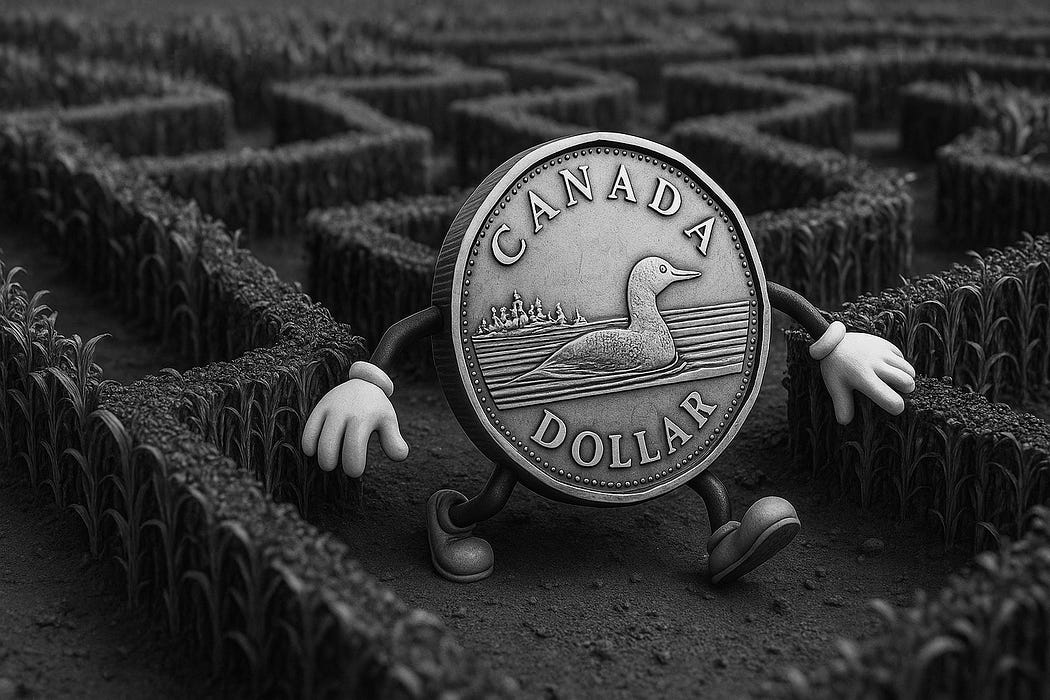
Global markets are wrapping up the week on a surprisingly positive note, with equity indices in Asia and Europe showing resilience and North America extending gains thanks to AI-tech momentum. But for currency watchers, the story is less about today’s moves and more about what lies ahead. The Canadian dollar, in particular, is hovering near four-month lows against the U.S. dollar, and the outlook hinges on central bank decisions, oil prices, and geopolitical risks that could shape trading into next week.
USD Weakness and Shifting Global Dynamics
The U.S. dollar has lost some steam after safe-haven flows earlier in the week. Tensions in Eastern Europe and U.S. discussions about expanding support for Ukraine initially lifted the greenback, but softer economic data and optimism in global markets have left it underperforming heading into October’s second week.
What stands out is how other major currencies are behaving. The euro is holding ground despite mixed PMI revisions, the yen is clinging to speculation of a Bank of Japan rate hike later this year, and the New Zealand dollar has staged a small comeback even as markets brace for a rate cut next week. These cross-currents underscore how much the narrative is shifting toward central bank expectations rather than day-to-day headlines.
Canadian Dollar Stuck Near the Bottom
The Canadian dollar is flat but stuck close to its weakest levels since mid-May, with USD/CAD trading just under the 1.40 threshold. Two forces are pressuring the loonie:
- Falling oil prices: Crude has slipped more than 8% in the past week, eroding one of Canada’s strongest supports.
- Rate cut expectations: Markets now price a 60% chance the Bank of Canada will cut rates again on October 29, up from a 50/50 split just days ago.
The 200-day moving average around 1.3987 remains an important technical barrier. Traders tested it this week, but so far it has capped USD/CAD from breaking decisively higher.
The Fed’s Next Move
South of the border, the Federal Reserve looms large. Markets are almost certain the Fed will cut by 25 basis points at its October 29 meeting, with another cut expected in December. That sets up a fascinating divergence: the BoC may still be easing, but the Fed is just beginning its cutting cycle.
If the Fed cuts aggressively while the BoC slows or pauses, the U.S. dollar could weaken, giving the Canadian dollar room to rebound.
Strategists See CAD Rebound Ahead
According to a Reuters poll of 38 currency strategists published on October 2, the Canadian dollar is set to strengthen over the coming year. The survey projects USD/CAD falling to 1.36 in three months and 1.35 in twelve months, a notable improvement from current levels near 1.3960【Reuters, Oct 2, 2025】.
The reasoning is simple: the Fed’s expected rate cuts should weaken the U.S. dollar broadly, and while Canada faces its own economic headwinds, the loonie is seen as undervalued at these levels.
While there is a case to be made for a weaker U.S. dollar based on the Fed’s expected rate cuts, the outlook for the Canadian dollar may be on a bumpier road. Factors such as the unpredictability of U.S. policy under the Trump administration and rising tensions between Russia and NATO add layers of uncertainty.
Key Risks to Watch
Of course, projections are only as good as the risks that don’t derail them. Here are the big ones to watch into next week and beyond:
- Oil Prices: Continued weakness in crude could offset any USD softness, keeping CAD under pressure.
- Canadian Jobs Data: Due next Friday, this release will be critical in shaping expectations for the October 29 BoC decision. A weak print would likely boost odds of another cut.
- Global Trade and Geopolitics: With the U.S. considering new tariffs and escalating involvement in Eastern Europe, currency markets remain headline-sensitive. Any surprises could shift flows quickly.
What This Means for CAD Watchers
For readers following the Canadian dollar, the short-term picture may feel heavy, with oil down and USD/CAD flirting with 1.40. But the medium-term view is more balanced. If the Fed delivers on rate cuts and Canada’s economy avoids a deeper slowdown, strategists expect the loonie to regain some ground.
That means the next few weeks could be pivotal. The October 29 central bank meetings — both Fed and BoC — are likely to set the tone for the rest of the year. In the meantime, markets will digest Canadian jobs numbers, Fed minutes, trade data, and political developments in Washington for fresh clues.
The Canadian dollar is currently trading at 1.39504 CAD against the US Dollar.


Comments
Post a Comment